


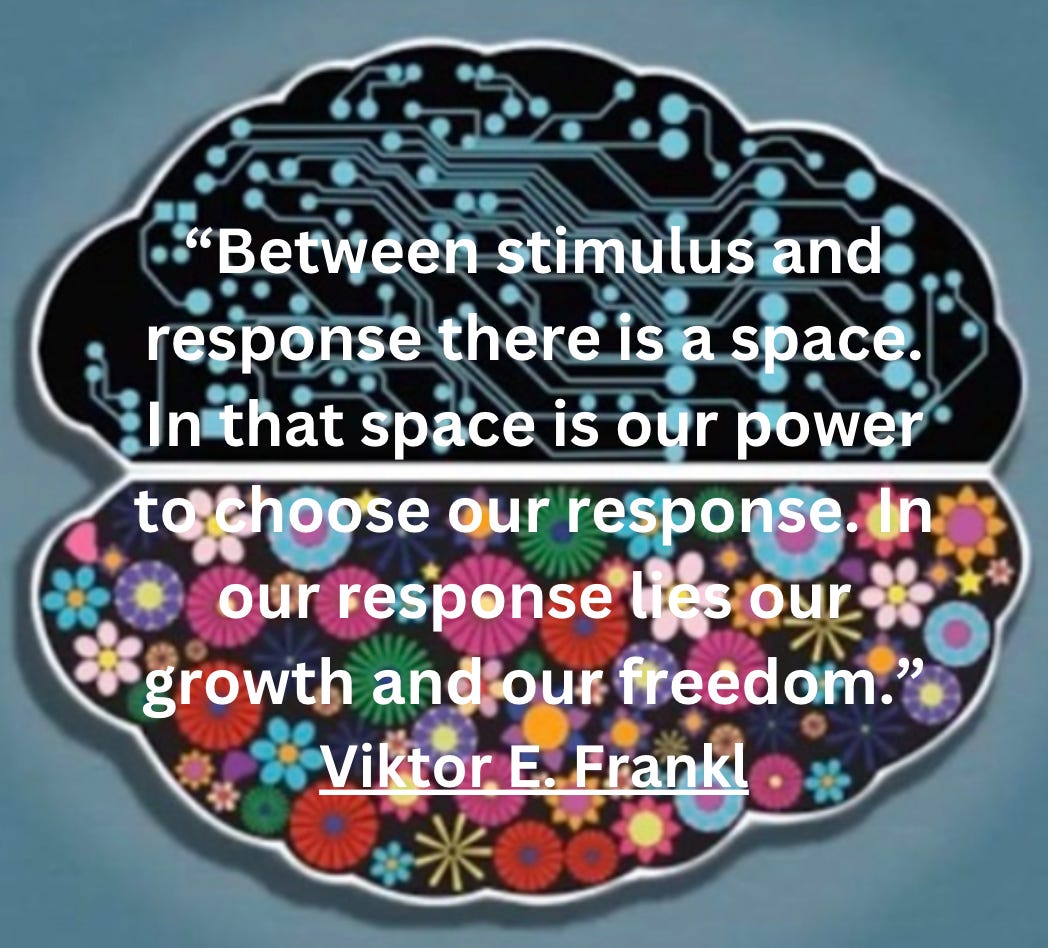
Have you ever been out on a run or a ride, on the tennis court, on the golf course, in the gym, in a yoga class, or enjoying any favorite activity and suddenly been rudely interrupted by pain? That pain that seemingly comes out of nowhere leaving you making up stories for why it happened. Maybe it’s my shoes, my bike fit, I didn’t warm up enough, too many days in a row, I’m getting old, overdid it, wearing out? It’s that oh shit moment where your mind spirals into the future and anxiety spikes with worse-case scenarios & catastrophic thinking. This is terrible, I’ll have to see the doctor or PT, maybe I’ll need surgery, what if they have to amputate, I’ll never be the same, I’ll lose all of my friends and no one will ever love me again! This is the moment when your nervous system quickly ramps up into high alert and things go from bad to worse. While this early reaction is primal and quite normal as an initial act of protection, most people don’t realize that what you THINK in this moment will make or break your outcome. Your thoughts will determine how intense pain gets, and how long it sticks around. This liminal space between the onset of pain and your reaction to it creates an opportunity to interrupt the brain’s tendency toward a state of danger alarm in the presence of sudden onset pain.
The first thing I’d like you to understand is that pain is an EARLY danger alarm. A clever feature of your nervous system is that your brain will turn on pain to protect you BEFORE you do any damage to your body. Of course, if you fall off your bike, sprain your ankle suddenly, experience a car crash, fall on ice, or experience some traumatic moment of bodily injury, the early danger alarm never has a chance to warn you. But what differentiates these two scenarios is that the latter type of pain is often a result of true tissue injury while the former is simply a warning of potential or perceived danger. Most of the time, pain that comes out of nowhere isn’t related to bodily injury at all. But if you freak out and spiral into catastrophic thinking, your pain experience will be similar to an actual injury. And in many cases, symptoms will stick around even longer than pain from an injury simply due to those fearful thoughts. So how can you know which type of pain you have? I’m glad you asked because I’m collaborating with a group of clinicians on a study, in partnership with Dr Yoni Ashar and UCSF, where we’re working to validate a screening tool to help people in pain in pain differentiate whether they’re injured or not.
In my practice, 9 out of 10 clients I evaluate with acute pain (brand new symptoms that just started) are not injured. They either have pain that sticks around after an injury or surgery has healed, or they were never injured in the first place. The first step in determining if you’re the minority 1/10 who is injured/healing is to ask yourself “Was there an obvious moment of injury?” For most there was not. In addition to some physically traumatic event, you’re looking for evidence that you actually hurt yourself. Swelling, bruising, redness, warmth, bleeding, locking, catching, instability/giving out, numbness/tingling, and/or significant tenderness to touch.
The next question to ask yourself is “Have I hurt this part of my body before?” Remember that the brain has a memory for past injury and surgery. Those “neural pathways” go dormant after you heal but can re-activate for many reasons. Once a body part has experienced pain or injury, the brain stays more vigilant and keeps a close eye on that part. Dr. Bessel van der Kolk’s seminal book “The Body Keeps The Score” illustrated the early research on, and clinical applications of, this concept. The early danger alarm becomes a bit more sensitive than normal. So pain will come on even earlier, long before you injure your body. Most of you now know that psychological and social stressors can also trigger real physical pain in the absence of an injury. And the brain loves to turn on pain in areas that are impossible to ignore. Choosing a body part that was previously injured is certain to create fear and reliably get your attention.
In the absence of a clear injury, the 3rd question to ask yourself is “what was/is going on in my life that might better explain the timing and location of this pain? It’s universal, normal, and common for emotional stresses to manifest as physical pain. Turns out that what’s going on in your psychological, social, and even spiritual life is a far better predictor of physical pain most of the time. Sometimes the location of pain is an important clue. “What about this moment is salient and reminds me of the last time I had pain in this area”? “Why would my brain choose this body part or this symptom to get my attention”? “Is there some metaphor or meaning to these symptoms”? Quickly shifting your attention away from “my body is damaged” and instead toward feelings of overwhelm and life stress can lead to important and meaningful insight. Not to mention how this shift in focus can create a rapid interruption of the danger alarm. Remember your brain’s altruistic job is to keep you safe and it’s simply using an effective signal (pain) to alert you to things that are potentially, or actually, emotionally dangerous. Once you attend to those factors, the pain is no longer necessary and the danger alarm will turn off.
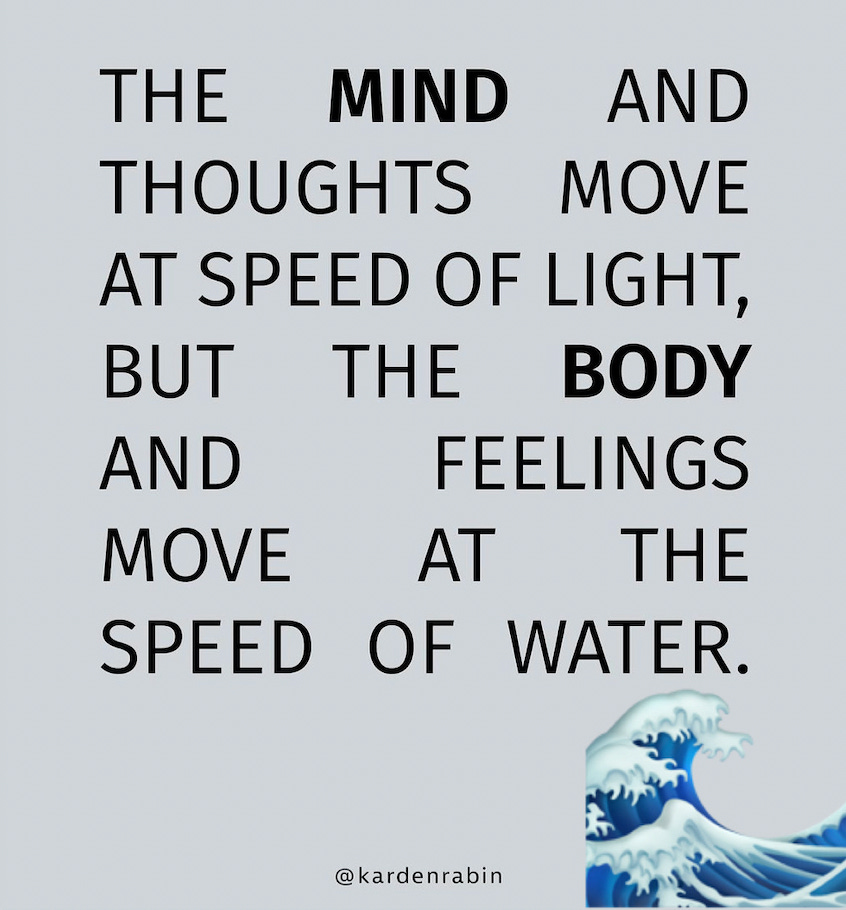
One final way to differentiate injury pain from non-injury pain is using symptom behavior. The more of these symptom behaviors you notice in the first few days or weeks of pain, the more likely you’re NOT injured. Is the pain inconsistent/intermittent, does it change, spread, move around, affect one whole side of your body or one entire arm or leg, or is it symmetrical and on both sides like a mirror image? Does the pain get worse with rest, in static positions, during sleep, when you’re thinking about it, or when you’re stressed? Does the pain feel better when you’re distracted or immersed in something, when you’re physically active, temporarily after treatments you expect will help, or when you’re relaxed? Is your pain triggered by unexpected or benign factors like food, weather, shoes, chairs, beds, pillows, light touch, or during safe movements/activities? Most commonly in athletes, we see that pain is better with activity but gets worse AFTER activity or the next day/days later. And another telltale sign that you’re ok is that your pain gets worse with rest. Rest is ONLY indicated in the very short term after an actual injury or surgery. And even then it has limited utility. Remember after most surgeries movement is indicated and encouraged on day 1!
Pain is a massive interrupt to everyone’s quality of life. Ultimately, the goal here is to pause that initial fear reaction that unnecessarily sensitizes all of us to pain. I want you to be able to quickly identify whether you need to seek treatment or just let it ride and watch it get better in a matter of a few hours or days. Remember that while most injuries heal themselves, most pain is not due to injury. I hope you’ll be able to use pain as a way to attend to and address any life stress, feelings of overwhelm, emotional needs, or social challenges you face. Most importantly I hope you’ll experience less setbacks in your life as a mover, in your career, as a partner, friend, family member, or parent, and as the important person you are in your life. We’re all better off when we learn to master our nervous system’s danger alarm. Understanding pain leads to more growth, better relationships, more success, and increased feelings of safety which reliably leads to more joy and contentedness in life. Please share this with your friends and family so we can all continue to thrive, show up fully in life, and bring our unique gifts to the world.
After reading this, can you think of a time when you had real pain that was likely NOT from an injury? Please comment here or send me a message with your insights or questions.
Be well, my friends.
Good stuff Charlie. Great to hear another voice out there helping to spread the word on psychophysiological pain. I will look forward to sharing your knowledge with my patients. Thanks.
Great essay, Charlie. That pause is so important, if I can catch myself before I'm 10 miles down the fight/flight road.