

Quantum physics is weird and incredibly complex. I wish I was smart enough to explain it in vivid detail and elegantly connect it to pain. But instead I’ll just share the cool fact that particles (like light) behave based on the expectation of the observer. The “observer effect”, from the original double slit experiment, illuminated (literally) the idea that the behavior of light particles changes simply because they’re being observed. That the observer’s presence somehow influence their behavior. The observer effect shows up in computer science, physics, and even human and animal behavior. Basically, you have a significant manipulative effect on reality.
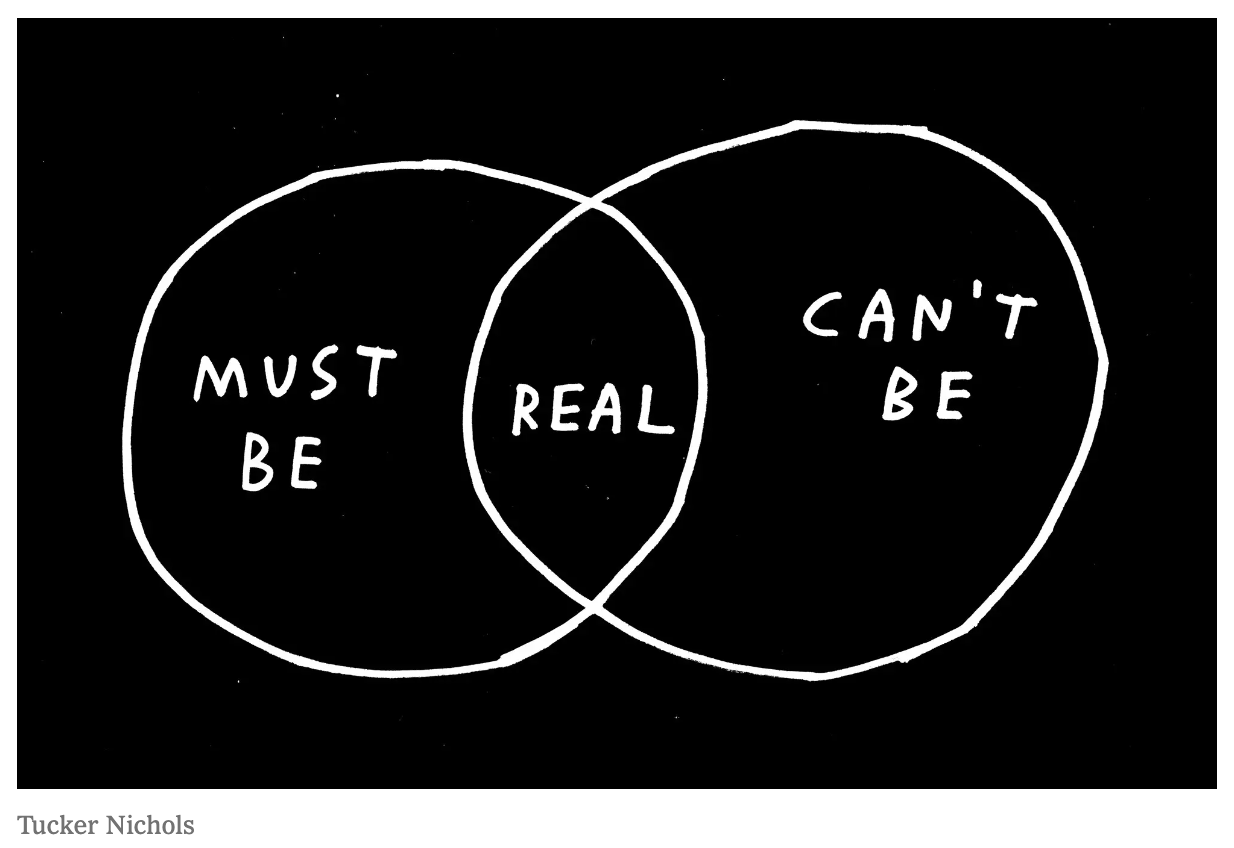
The effects of observation get more interesting when we consider how we filter what we see through our lens of biases, assumptions, preconceptions, experiences, and other distortions. Observer bias occurs when we alter what we see or experience by selectively noticing what we expect, predicting based on what we’ve experienced, or behaving in ways that influence the outcome. Without intending to do so we may think, behave, and feel in ways that lead to specific outcomes unique to our personal reality.
Where this gets interesting for me, and hopefully you, is when it comes to the physcial sensations in our bodies; pain and other symptoms. Because you’re observing your own experience, you are equally vulnerable to observer bias making every sensation in your body subjective. This is one reason the bio-psycho-social (BPS) model of pain needs an update. If this is the first time you’re learning about this outdated model, I’m sorry you missed the last few decades. While it’s on the way out, I still find the BPS model helpful for people who struggle to embrace modern pain science. while all pain is technically constructed and experienced in the brain, the BPS model validates the role of the body in the pain experience. Skeptics will then open up to a both/and approach where the body is still considered important while leaving the door open to the psychological and social factors (which are usually the primary drivers of symptoms). The problem is this:
The BPS model no longer fits with current and emerging pain neuroscience which is moving swiftly toward a perception and prediction model.
People cue on the BIO prefix (they only hear “something is wrong with your body!”) which reinforces fear about the body being the cause of pain and does nothing to connect to the actual root cause.
The possibility of rapid change through neuroplasticity is reduced as people in pain and clinicians continue to feed fear and treat the wrong variables.
I’ve written about the brain’s predictive nature in the context of pain and other symptoms before. Basically the idea that your brain’s job to is to predict what’s likely to happen next in order to keep you safe and alive. Like this example of F2 driver Isack Hadjar reacting lightning fast to avoid a crash with a disabled car at the Monaco Grand Prix this year. He predicted a crash and reacted incredibly fast (not a conscious decision) to avoid it.
Prediction is essential to survival and thus helpful most of the time. But the brain’s predictive nature can also result in persistent symptoms when it learns (incorrectly) that certain activities, foods, people, situations, postures, and other factors are dangerous. As the brain wires these connections, based on perception, and makes them automatic, they continue to operate outside of conscious awareness leading to unhelpful pain biases. People find the prediction model a simple and actionable framework that allows them to quickly re-conceptualize why they have pain and effectively unlearn the pattern by changing or unlearning the prediction.
But what’s lighting me up these days is the addition of the “symptom perception model” of pain. The idea that what you feel is a product of your perception as the observer. Your pain experience is highly vulnerable to your brain’s mis-perception of sensation which is constructed based on your subjective and biased interpretation. Let me share some examples by way of asking a few questions.
Do you see with your eyes?
No, your eyes collect raw information. Then your brain interprets that information (after flipping it upside down and switching sides, by the way) based on what it expects to see. So you don’t see with your eyes, you see with your brain! Now, is your vision always accurate? Of course not. It’s massively influenced by interpretation based on your experience and expectations. For instance, you and I might see totally different people or details at a busy sporting event or in a store with lots of stuff. Illusions are a fantastic way to illustrate this point. How many black dots do you see?
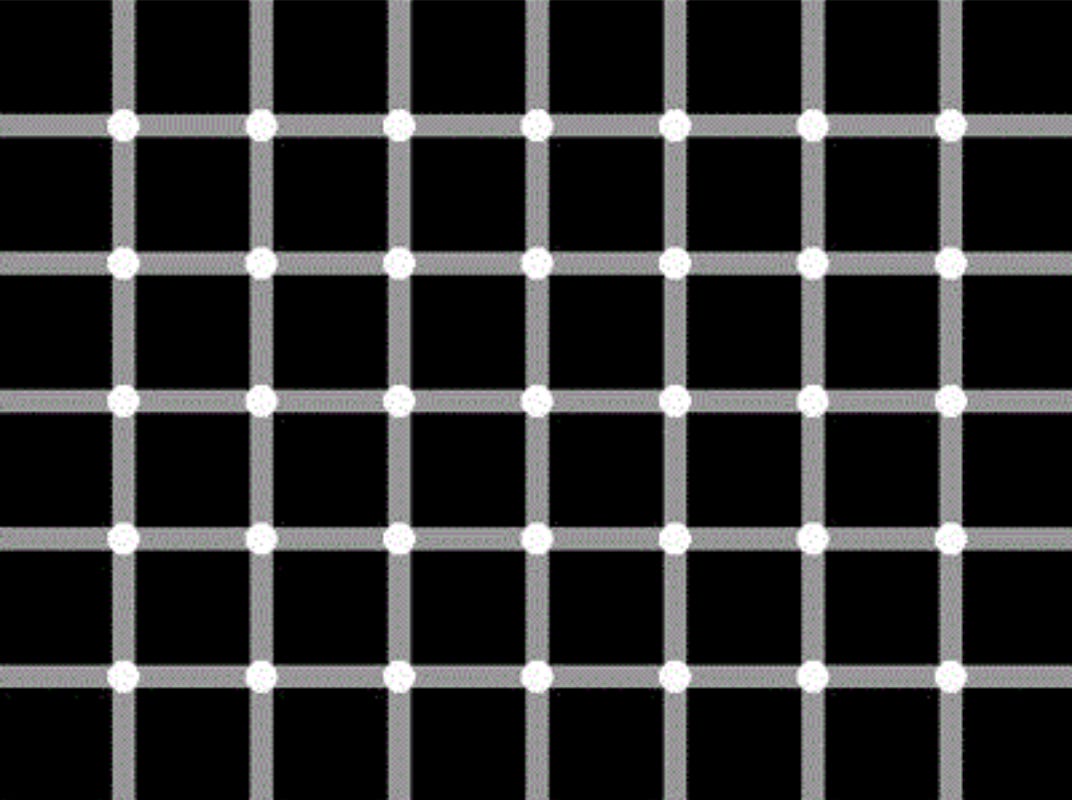
Well they’re actually all white! But the black dots appear and disappear as your brain tries to reconcile the contrast. This happens with color too. The brain will create color where there is none based on what it expects to see. For instance the coca cola can in this image below looks red, right? But if you zoom in, you’ll see that the image is only black, white, and cyan. Your brain creates and fills in the color because you expect a coca cola can will be red…creating the perception of red.
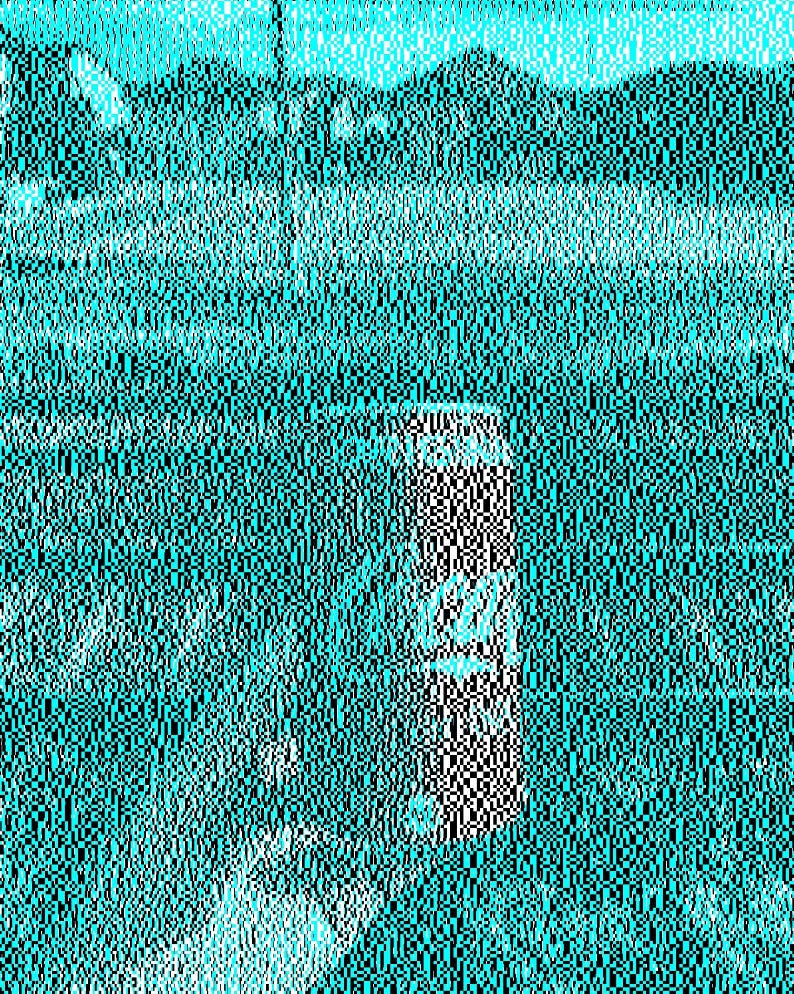
Credit: Akiyoshi Kitaoka
Now, do you hear with your ears?
No, your ears collect raw information and feed it to your brain where it’s interpreted based on perception. Is your hearing always accurate? Of course not. Have you ever had an auditory hallucination where you thought you heard something that wasn’t accurate or didn’t happen at all (like someone calling your name)? Here’s an auditory illusion to illustrate the point. Listen to this audio and note which name you hear. Then play it for an assortment of friends and family members and see if they hear something different.
Most of you, after a fair survery of people, will appreciate that while the audio is objectively the same sound, it’s interpretated differently by others based on many factors.
What about other physical sensations? Do you feel with your body?
No, your body is a giant sensory organ that, like your eyes and ears, feeds information to your brain. Your tissues might modulate sensation but have no role in interpreting it. Like vision and sound, your brain has to make sense of that information based on it’s expectations, predictions, biases, past experiences, and many other factors. Have you ever felt your phone vibrating in your pocket only to discover you didn’t have your phone? Have you ever looked over your shoulder to pull out from a parking spot and felt your car moving as someone pulled into the parking spot next to you before you even started to back up? Have you ever felt like there was a bug crawling on you only to itch yourself and discover there was no bug? Have you ever felt actual pain from watching something painful happen to someone else? These are all mis-calculations based on your brain’s perception. These sensory halluncinations are illusions! The rubber hand illusion is a cool example of how quickly and completely the brain can, through neuroplasticity (not magic), change a person’s perception of physical sensation. There is in fact real science happening here.
Justin Willman - Magic For Humans
Please don’t interpret my sharing this as an invalidation or minimization of your pain or other symptoms. ALL SYMPTOMS ARE REAL! ALL PAIN IS REAL! But sensation is highly subjective based on your interpretation. This is why “pain threshold” is a silly measure. Your 10/10 pain is different from my 10/10 pain. If your brain wants to protect you from danger using pain, it gives no F***s about your pain tolerance. It’ll turn pain up loud enough to get your attention. As the observer of your own experience, you owe it to yourself to stay curious about the sensations you feel rather than to take accept them on face value. If you’ve been following my writing for a while, you know your brain interprets sensations based on they’re threat value. On a balance of danger vs safety. Independent of tissue injury. If your brain determines your situation is dangerous, you’ll perceive more intense pain for longer. While your illusory mis-perception of color and sound may be kind of cool and fascinating, pain has a far different “threat value”. One that pokes at our sense of safety, vulnerability, and our need for survival.
One of my clients was dealing with back pain and sciatica (nerve pain in his leg) that limited his ability to walk. After a family trip, he returned to the airport only to forget where his car was in the parking garage. He frantically walked around clicking his remote for 90 minutes trying to find his car. He noticed that, despite the stress, he had NO PAIN in his back or leg. Despite the stress of the situation, his brain de-prioritized pain so he could find his car. It knew that finding the car was a critically important and so it turned pain off. What can we learn from this? Well this was a “click” moment that his pain was not structural. Injuries don’t turn on and off when we’re distracted or immersed in something. If you sprain your ankle or break a bone, you won’t suddenly be able to walk on it as much as you want. It also showed that pain was optional based on conditions and perception. We had evidence that his pain could completely go away.
So what’s my point? Pain correlates with your brain’s perception of danger. It’s not always a sign of tissue damage or injury. Bodily injury can and does happen. But it consistently and reliably heals in a relatively short amount of time. That said, your perception of damage or injury (and the fear this generates) is enough to keep pain turned on long after healing is done (Regardless of whether there was ever an injury to begin with). The old “body is damaged” model of pain is now completely outdated. We now know that danger shows up in many non-physical forms including life change, relationship challenges, work stress, feelings of overwhelm, loss of control, and anything in our day to day lives that creates emotions of sadness, anger, rage, guilt, grief, shame, etc. Fear can even be generated by your own negative internal self talk and mindset about life. For most of us, those non-physical fear factors are the primary cause of symptoms from day 1, even in the acute phase! Especially if your pain started without an obvious physical injury.
So the next time you have pain, I invite you to get curious about your perception of those sensations, the stressful things going on in your life, and your other biases as the observer. When you understand that your observation of your own pain experience is biased by your own belief; as well as the belief of friends, family, and the clinicians supporting you based on your perception of danger, what might you learn? Does the illusion collapse and change? Is it possible that your body is just fine and perhaps there’s another source of danger creating emotion that’s manifesting as the perception of physical sensation? Regardless of whether the “danger” is real or perceived, pain demands a curious investigation to get clear on its nature. I’m here to help you make sense of your experience. In the meantime, does your new understanding of sensation as an illusion make you feel more safe or does it create a stronger feeling of danger? Hopefully the former. Let me know what you think. And if you have other illusions that illustrate my point, please share them with me. charlie@mperformance.com.
In the meantime, don’t trust everything you see, hear, or feel. Stay open to the mystery of it all.
Brilliant article Charlie! Warren