

Pain was always designed to protect us from physical danger, like injury. But despite decades of science showing how pain is influenced by many factors beyond the body, most clinicians and people in pain still believe pain = injury. We know physical pain is a common sensation the brain chooses to protect us from emotional danger like stress, overwhelm, life change, anger, grief, and sadness. But to accept this phenomenon, I think it’s helpful to understand how pain evolved to be protect us in this way.
A question I often get asked is “Why has pain become generalized to other non-physical factors, like emotions? Well my basic answer is always that “emotions are the language of the body”. If you’re paying attention, every emotion connects to an associated body sensation, and every body sensation connects to an emotion. Emotions are the end result of any life experience. You have a thought, make a choice to do some behavior based on that thought, and that experience causes the release of a chemical called an “emotion”. This chemical release is one way we “feel” our emotions. To explain why this came to be a part of our programming, my colleague Howard Schubiner, MD floated this hypothesis, and I think it’s a good one. I embellished and expanded it a bit for your reading pleasure.
A few hundred thousand years ago, early people lived as hunter-gatherers and had to adapt to a dangerous environment to survive. Homo sapiens and Neanderthals roamed the earth at the same time. For both groups, it was a world filled with physical threats. Sabertooth tigers are one obvious colloquial example!

Credit: Dave Sabey
Neanderthals were bigger, stronger, and had bigger brains. They were in many ways physically superior to Homo sapiens. But they were also very independent and individualistic often hunting and living alone or in small groups. Thus they were not incented to, nor did they benefit from, the socioemotional relationships that we appreciate today. This factor, combined with glacial climate change, the ecology evolving significantly, and their inability to adapt their hunting methods to a changing world, resulted in Neanderthals going extinct. Meanwhile, Homo sapiens survived.
One reason Homo sapiens might have survived is because we worked in larger more communal clans, we learned to communicate, hunt, cook, reproduce, farm together, innovate, and problem-solve. Essentially we relied on our communities and those social relationships as a means to overcome the threats that killed Neanderthals. So we became conditioned to believe that those relationships, and the thoughts, behaviors, and feelings inherent to them, were critical for our survival. So, emotions became an important part of preserving life in more communal societies. If early people were injured physically, they could die because of that injury, especially without support from a clan or community who cared for them. Physical injury was a threat to both Homo sapiens and Neanderthal, and both likely experienced pain in these situations. But is it possible that Homo sapiens navigated and recovered better from injury because of the support of their more emotionally evolved communities?
But to understand how emotions became linked with physical pain, we have to look deeper. Due to their more relational and emotional nature, Homo sapiens had an extra risk factor that might have potentially led to injury or death. Can you imagine what might have happened if you got kicked out of your community because you stole, damaged someone’s property, beat someone up, killed someone, slept with someone’s wife, or hurt another physically or emotionally for any reason? If you transgressed in some way against the clan, you’d likely be shamed and kicked out, and that would no doubt result in a lot of emotion. More importantly, without your community, the risk of injury or death was extremely high. Due to the social nature of Homo sapiens, the emotional threat became equal to the physical threat, or greater.
So what if the brain started to use pain to protect Homo sapiens from anything that felt like a primal physical emotional threat to the individual or the species. Maybe our brains learned to turn on physical pain if there was an emotional stressor that put us at risk in our relationships. Is it possible physical pain became an effective way to protect us from emotional stresses related to themes of control, intimacy, change, order, overwhelm, anxiety, depression, etc? Events connected to these themes would likely threaten the individual as well as the health of the community. The brain would essentially be interpreting those variables as dangerous cueing you to pay attention and do what you need to do for the health of everyone involved. Maybe even to force you to reconnect with your community, to slow down, to make things right, and to heal the emotional pain that puts the individual and the community at risk. Perhaps this is why the modern brain lights up on fMRI the same way when you have a physical injury as it does when you have an emotional injury, like a breakup.
But why is this still so common today? The end of a relationship may be really hard, but rarely does it lead to death. Some estimates indicate that 90% of people who go see a doctor or PT with physical symptoms have no injury or medical issue but rather symptoms caused by stress. 1 in 5 people worldwide deal with chronic pain and the number is every higher when you consider other symptoms like anxiety, depression, fatigue, digestive symptoms, immune conditions, etc. So what could be driving the persistent link between physical pain and emotion?
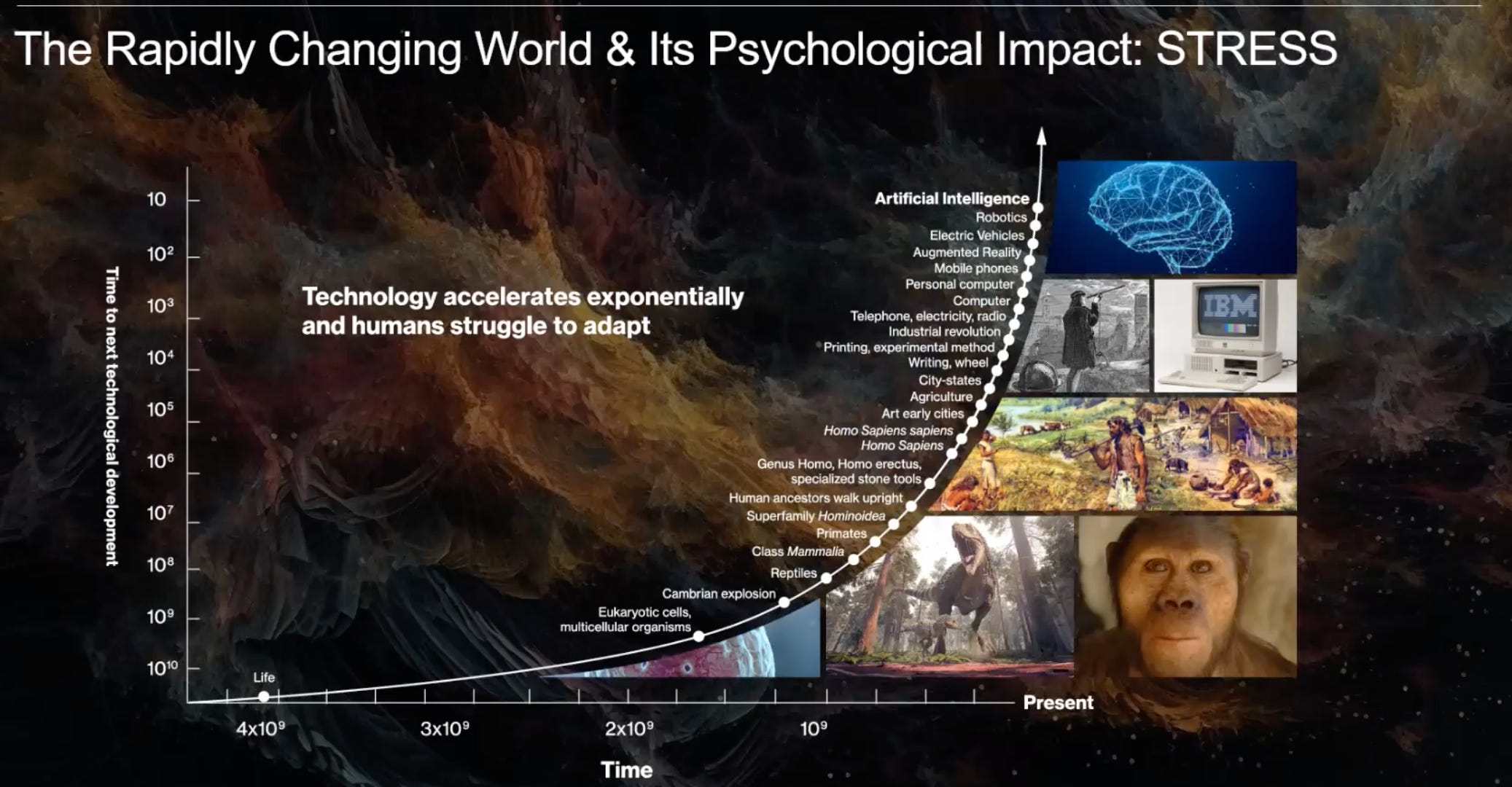
Well, it’s only been 10k years since we moved from being hunter-gatherers to the agricultural era. At this point, societal complexity increased. 223 years ago was the start of the industrial era which added even more complexity to our society. It’s only been 40 years since the first computer, and smartphones have only been ubiquitous since 2014! The exponential increase in complexity of our society is hard to comprehend.
Credit: Dave Sabey
We are VERY adaptable as a species, but the human nervous system has never been asked to change so quickly, and it’s clear we’re struggling. Never in history have we been faced with such intense communal stress as individuals, or as a society. The volume of and access to news, information, the lives of others through social media, the overwhelming number of options in every domain, our ability to travel/migrate, and our exposure to technology is hard to comprehend.
The “perceived” size of our “community” these days is massive, and the emotional complexity of it is even more overwhelming. Think about how many other people’s lives you’re exposed to on Facebook and Instagram alone! How many of those people are part of your actual “tribe”? Our nervous systems are being bombarded with emotional threats from every direction (a lot of it from the lives of others) that the brain interprets, correctly or incorrectly, as objectively dangerous based on our past conditioning. While some of this information poses actual danger, most of it doesn’t threaten us directly. Probably safe to say that most of these emotional threats (from Facebook, Instagram, or other sources) wouldn’t get us kicked out of the clan and put us at risk for death at this point. But the brain still has that primal neurology whereby emotional threats equate to physical danger, and thus physical pain. Now those neural pathways have been habituated to a state of automaticity. So it begs the question, what do we do about it?
The first thing to understand is that we’ve also been programmed, epigenetically (through experience) to default to the negative. For hundreds of thousands of years, we were rewarded for attending to the risks and dangers in life. While they were likely more intensely threatening then, they were also far less frequent. So there wasn’t a chronic and ongoing focus on what could go wrong, on why something is dangerous, or on why this is “bad”. That same protective trait that served early humans, has now been generalized to most of the novel information that we’re faced with every day. Some sources say we consume 74 GB of information each day. Read more about how much information the average person consumed in 2022 HERE.
So the frequency with which we subconsciously react to our environment with a negative bias has increased in intensity and frequency. Pair subconscious negatively biased thoughts, with habitual choices and behaviors, with the emotions that result from those experiences. Now you have the perfect recipe for chronic pain or other physical symptoms that are linked to stress and emotion based on your past programming.
So can we unpair physical pain from emotional pain? Is that possible or even in the interest of humans in terms of survival? I believe that this phenomenon of the brain using physical pain to alert us to emotional pain is brilliant, once you understand it. You know by now that my goal is to empower you to leverage this epigenetic trait to your advantage. But to do that, you first have to escape the chronic stress danger alarm state that many of us find ourselves in. Here are my top recommendations to reduce the threat and danger load on your nervous system.
Learn about the new science of pain. Follow me and my colleagues for ongoing knowledge bombs about how to use pain as a superpower. One of my favorite reads about the new science of pain is Alan Gordon’s book “The Way Out”.
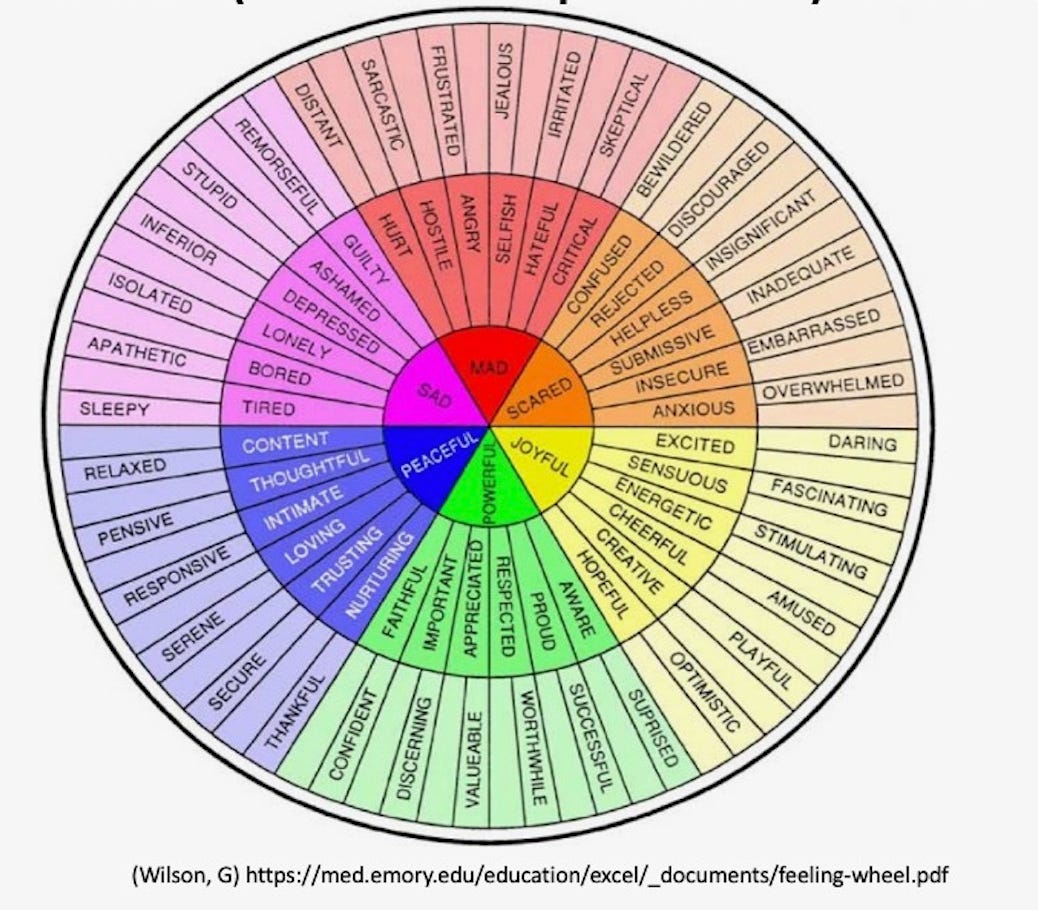
Improve your EQ or emotional quotient by upgrading your social/emotional awareness. Many books, podcasts, and blogs cover the subject in great detail. Some benefit from having a feelings wheel in their house where they can frequently become aware of their emotions by simply identifying and labeling them.

Use pain as a cue to tune into your emotions and to notice what’s going on for you/coming up for you in those moments
Do things to be “in your body”. Constantly feeding your brain information through your body from the environment reduces the brain’s reaction to the environment both physically and emotionally. Use play, novelty, fun, nature, and make it social for the best results.
Watch less news and stop your addiction to doom scrolling (and excessive scrolling in general). Where you put your attention, so goes your energy. When you remember that your energy and your time are currencies. While there is some value in being an informed citizen…once you realize your time and energy aren’t limitless, you might reprioritize where you’re putting your attention. Your nervous system will benefit from you staying conscious of how you spend these currencies.
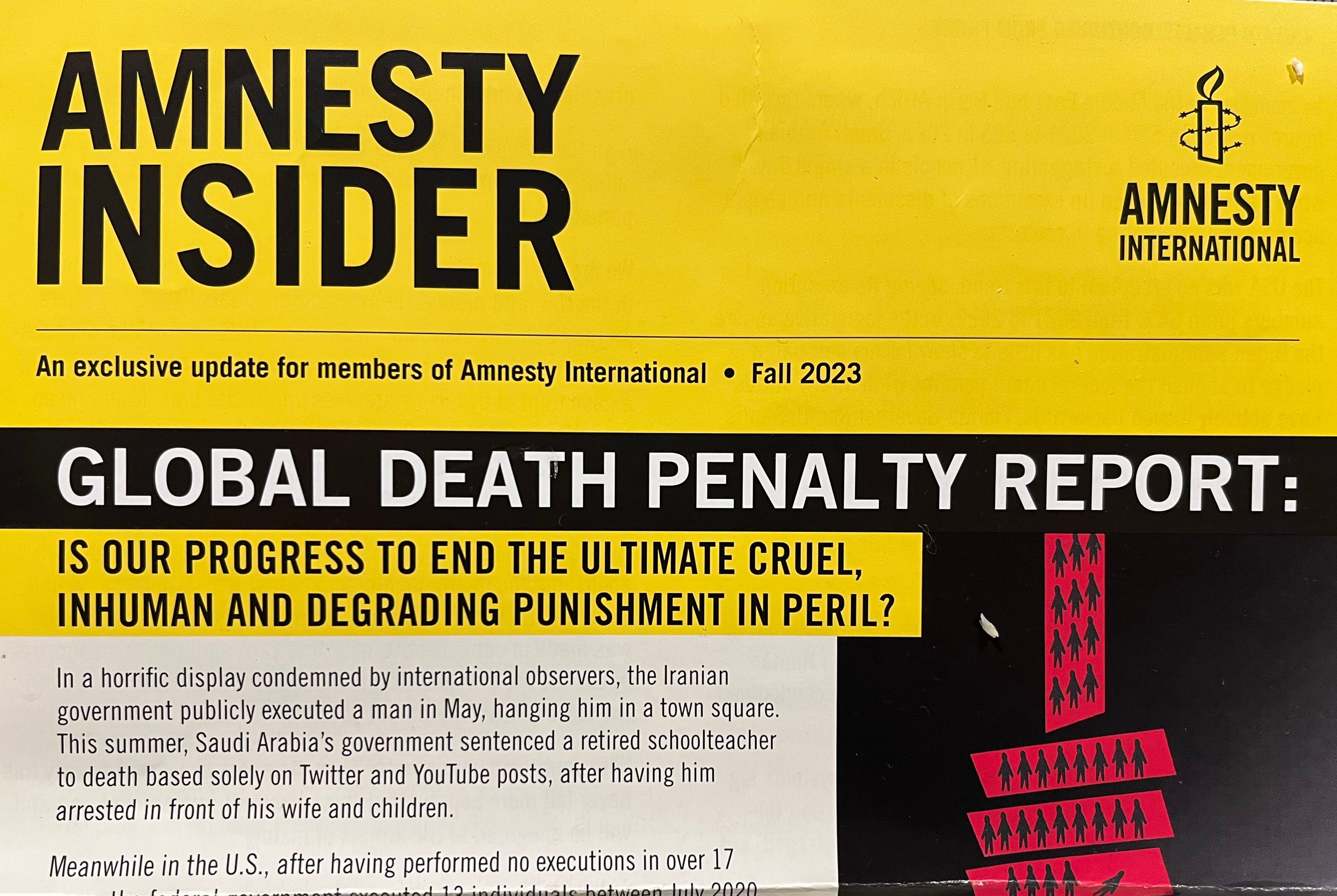
Protect yourself from information that doesn’t enrich your life and stimulate growth. If you consume a stressful news story from across the world or a social media post that creates stress, and you can’t take any action and have no control over the situation, question the value of having consumed that content.

Credit: Amnesty Intl.
Get clear on your values and your vision for your future. Set boundaries with people and things that interfere with that vision. Create a force field to insulate yourself from the bombardment of information so you can stay on your path. Setting boundaries is hard but ultimately super satisfying.
When you have pain, avoid the Fs - Fixing, Fearing, Focusing on, Fighting, Freaking out, Feeding, Frustration. Remember fear, not tissue damage, is the fuel for pain. Instead find a clinician or a coach who can support you in making important connections between physical pain, life stress, and the emotions that drive both.
Becoming conscious of your subconscious programming takes energy and is uncomfortable. This is why change often feels hard. If you’d like to talk about the links between your stress, emotions, feelings of overwhelm, and physical symptoms, please reach out. If you found this post helpful, entertaining, informative, or thought-provoking, please consider subscribing at whatever level feels right. Our emotions are wisdom and inform us toward the actions that align with our values. As you understand the value of emotions, you’ll see that the strategies for unlearning pain and creating a new personal reality in your life have never been more effective and accessible.
Be well!