

First, let’s get some business out of the way. I’ve had the pleasure of working with many of you over time, and I’ve been inspired by your recovery and success stories. I’d like to capture some of these to share with others who are stuck trying to find solutions. Especially solutions people aren’t yet aware of. The powerful healing ideas and tools from which many of you have benefitted. If you’d be willing to share a 15-30-second video or a few sentences about your experience, I’d be grateful. Something along the lines of “I used to be in this situation, I learned XY&Z, and now I can do this. Feel free to go off-script if you’re so inspired.

Please text your story or testimonial to me at 303.717.8351 or email it to me at charlie@Mperformance.com. Thank you!
Exercise and movement have always been a part of my life. I learned sports from my parents and family, who modeled & normalized being active for me from a young age. Overall, I feel fortunate to have grown up in an environment where sports molded me into who I am. Not everyone grows up in that kind of movement-positive environment. However, I didn’t always have the cleanest intentions and went through phases where I wasn’t participating in healthy ways. While I might have been fit and fast, I wasn’t necessarily physically or psychologically healthy, nor were my relationships. Like any ‘healthy” behavior, it can become unhealthy if we don’t approach it with the right intention. Note the contrast in the following image between 5-year-old me in the park and 25-year-old me running the Pikes Peak Marathon.
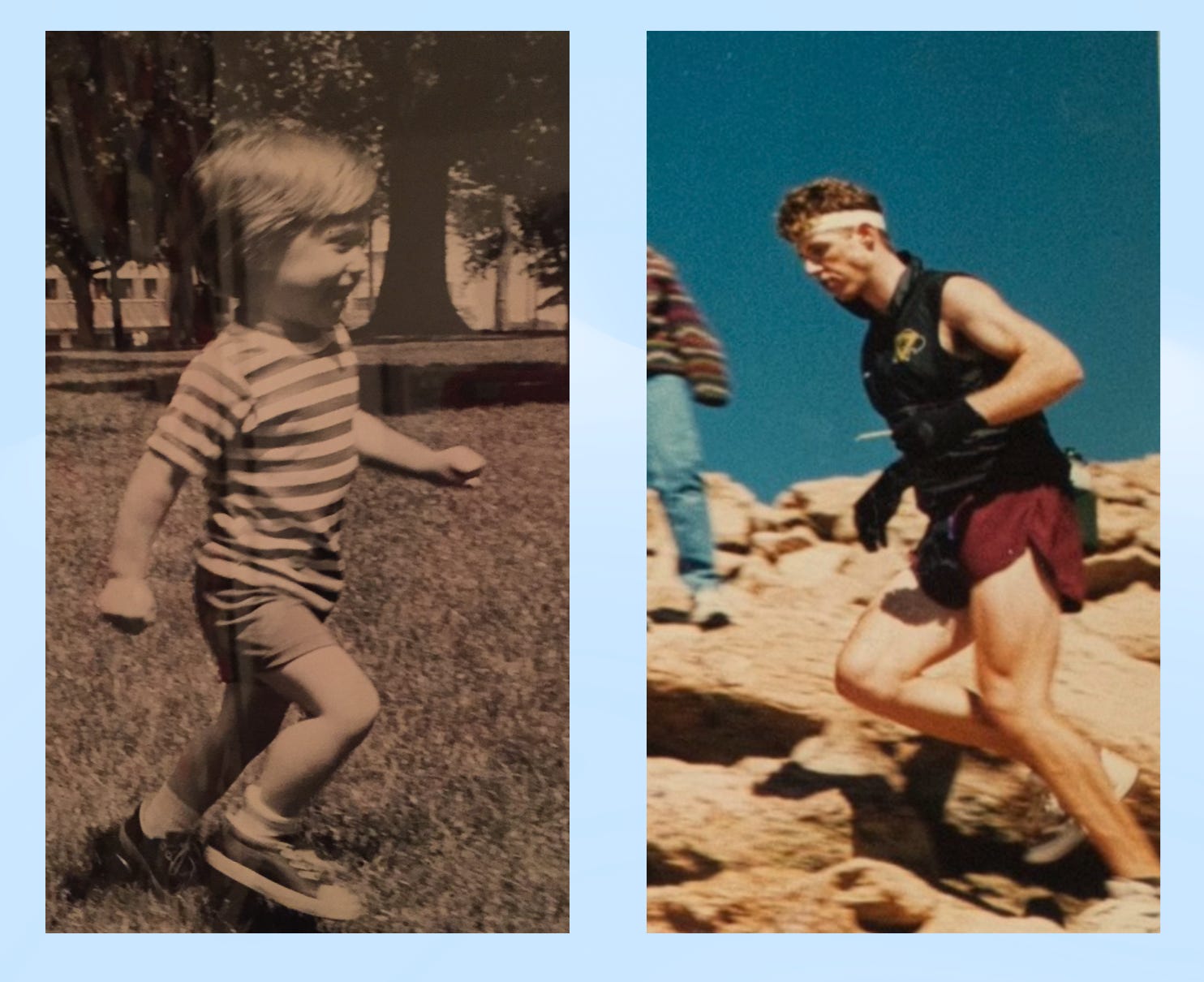
When I was young, movement was mostly playful, joyful, fun, socially connecting, exploratory, and often without purpose. But somewhere along the way, I, like many of us, lost that youthful intention, and exercise became serious, intense, painful, tainted by self-loathing, pressure-filled, a prerequisite, exploitative, routine, and it started to feel like work. Young Charlie is clearly engaging in movement with a loving intention while older Charlie is, well, doing something else. Check out this Instagram parody poking fun at why many endurance athletes choose to train.
As my relationship with exercise and movement has changed over the course of my life, I’ve become aware of the importance of intention. At times I wondered if I could be fit and fast and simultaneously truly enjoy myself. To engage in a way that’s aligned with my values where I welcome the challenge of skill acquisition, growth, and improvement. But without all the encumbered mindset that we often believe we need to achieve big things. At times, I believed that pressure, urgency, and self-criticism were necessary ingredients to becoming good at anything. Was there a way to get good at something and enjoy the process so much that it was mostly a joy to do the work? Was it possible to set up my relationship with sport and exercise so I mostly WANTED to do it instead of HAVING to do it? I’ve come to the conclusion that I might have been approaching many things in my life backward all along.
I was recently inspired while playing frisbee with a former professional triathlete friend who was just learning to throw. Ryan is an incredibly talented athlete overall and has raced all over the world. He joined my son and me on a beautiful day at a local turf field. My son is an excellent teacher and showed Ryan the basics. As often happens when one first learns to throw a frisbee, it’s initially awkward, and the frisbee flies more sideways than flat and ends up on the ground more than in the air. But I noticed that, as Ryan navigated the pre-requisite struggle phase of learning a new skill, he was having a lot of fun. He was laughing and joyful as he wrestled with the task. I noticed he was kind to himself rather than getting frustrated and beating himself up. He had a certain patience with the process and with himself that struck me. He wasn’t hung up on the goal or the outcome but seemed just to be playing with it. Within 15 minutes, Ryan was mostly throwing and catching really well. And by the end of the hour, he was already quite skilled and finding some flow. We talked about his approach afterward, and he shared how this mindset and intention served him during his career. My observation was that he learned more quickly as a byproduct of an intention fueled by patience, self-compassion, fun, and play. From that point, I set out to change the way I approach exercise and movement.
To paint a clear picture of how dichotomously an athlete’s mindset can look, here is how mine has shifted over the last 25 years
For 25-year-old Charlie, exercise, training, and racing were about:
Proving worth
Trying to find happiness in outcomes
Comparing myself to others
Doing things because I should and because I have to.
Disconnection from my feelings & my true nature
Pressure, urgency, and self-criticism
Bolstering low self-esteem
Trying to feel like enough
Physical suffering to reduce the intensity of emotions
Coping abstractly with life’s stresses
Escaping life’s challenges
Gear and keeping up with the latest and greatest
For 50-year-old Charlie, movement, and exercise is now about:
Enjoying and reinforcing a strong sense of self
True enjoyment of the process
Connecting with others
Doing things because I truly want to and choose to
Permission to opt out of things that I’m not excited about
Approaching exercise and movement with a sense of fun, play, & joy
Listening to my intuition about what I need on a given day
Starting from a place of “I’m enough” regardless of how it goes
Physical discomfort on my terms and as a path to build resilience in life
A mindfulness practice
A way to work through emotions directly and privately
Idea generation and creativity
A process that leads to finding physical and psychological flow
Curiosity about new places and experiences
An enjoyment of, and gratitude for, my physical body
Ok, I still love gear, but I can’t be perfect :)
Now, I realize I’m painting an intense picture of my old mindset and intention. Note that I didn’t do all of these things at once. Nor were they explicit but rather subtle and insidious. They existed as subconscious, automatic, habitual thoughts, feelings, and behaviors under the surface. Most of them had been conditioned from a young age by important people and experiences in my life. It took work and energy to become aware of and shift my mindset. It was uncomfortable and literally felt like a death at times. Letting go of my old self felt like a threat to everything I knew and loved. I feared I’d ruined those activities for myself as a consequence of past hard memories and experiences. It was a paradox of knowing I wasn’t engaging in healthy ways, but I worried it was the only way I knew how to do it.
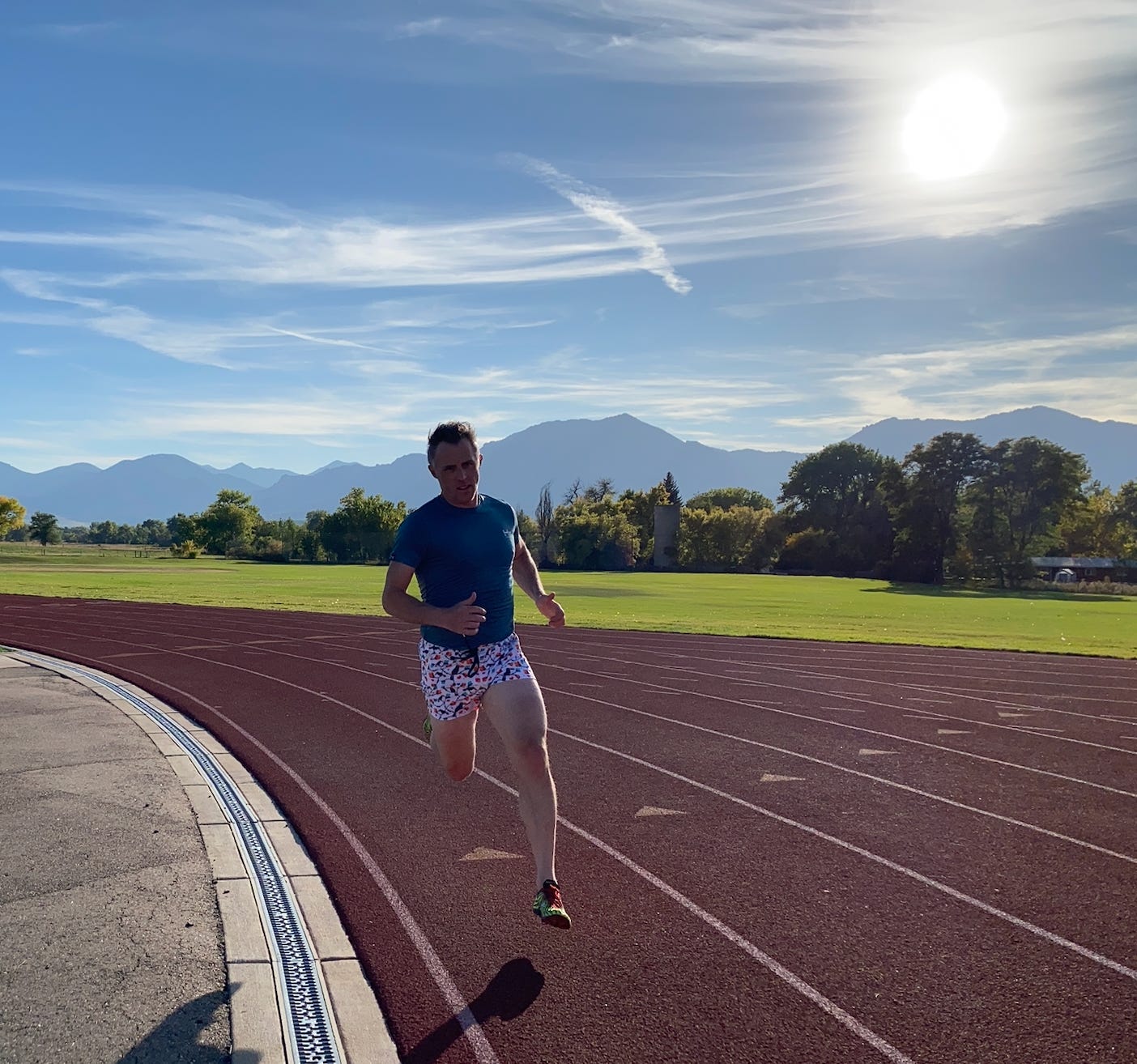
But I realized that it wasn’t the exercise, movement, training, or racing itself that was the problem. It was my mindset and intention. Once that changed, everything changed. I saw through the illusion that I’d created in my 20s, 30s, and 40s that exercise was something I HAD to do. As I let go of this old mindset, my fitness in my 50s is the best it’s ever been. Both physically and psychologically. So many of my clients lament getting old and the impact it has on their athleticism. Weight gain, loss of muscle mass, fear of injury, avoidance of activities, loss of motivation, etc. While I’ll acknowledge that I’m fortunate to have grown up the way I did and that I have some inherent athletic genetics, my experience after working with thousands of older athletes is that age has little to do with athletic longevity. Longevity is a byproduct of the consistency that comes from doing things for healthy reasons that align with your values. And the reality is that this is a moving target that’s meant to change over time. If you’d like to explore your relationship with exercise and movement in your life and context, please reach out, and let’s connect so I can share more.
Do I still go out and do hard things? You bet I do. Do I still set goals and challenge myself to achieve them? Of course. Do I find value in the struggle to learn new skills and get out of my comfort zone regularly? Yes and yes! In many cases, the objective behavior looks similar to the way 25-year-old Charlie used to exercise. However, my mindset and intention are radically different, leading to paradoxically different processes, experiences, and outcomes.
But how does this apply to pain? Well, I’m glad you asked. Now that you understand the importance of mindset and intention, the answer is quite simple. Approaching pain recovery from a place of pressure, urgency, self-criticism, or fear will consistently hold you back. When you understand that pain and other symptoms are a byproduct of conscious or subconscious fear rather than tissue damage, a simple inventory of your modus operandi will reveal a lot. Any thought, feeling, or behavior aimed at FIXING the body will invariably drive subconscious fear, even if the act is objectively healthy. For instance, if you go to the gym with the intention of fixing your shut-down glutes, your short hamstrings, your weak core, or your “slipped” disc, you’ll likely notice minimal change (or even get worse). Contrarily, if you approach the gym with the intention of moving in healthy ways that are joyful, fun, and preferred, you’ll likely notice everything changes. Since the glutes, hamstrings, core, and disc were not the CAUSE of your pain, to begin with, those variables take care of themselves and either resolve or stop bothering you. The brain comes out of a state of danger alarm, and the pain resolves. Whether it’s foam rolling, trigger point needling, joint manipulation, scraping, taping, cupping, acupuncture, strength training, stretching, corrective exercises, surgery, or injections, when those things help, it’s because they reduce fear, changing the brain’s perception of danger. Not because they fix anything. Again, objectively, there’s nothing wrong with any of those interventions. It’s your mindset and intention. Your belief that predicts the outcome.
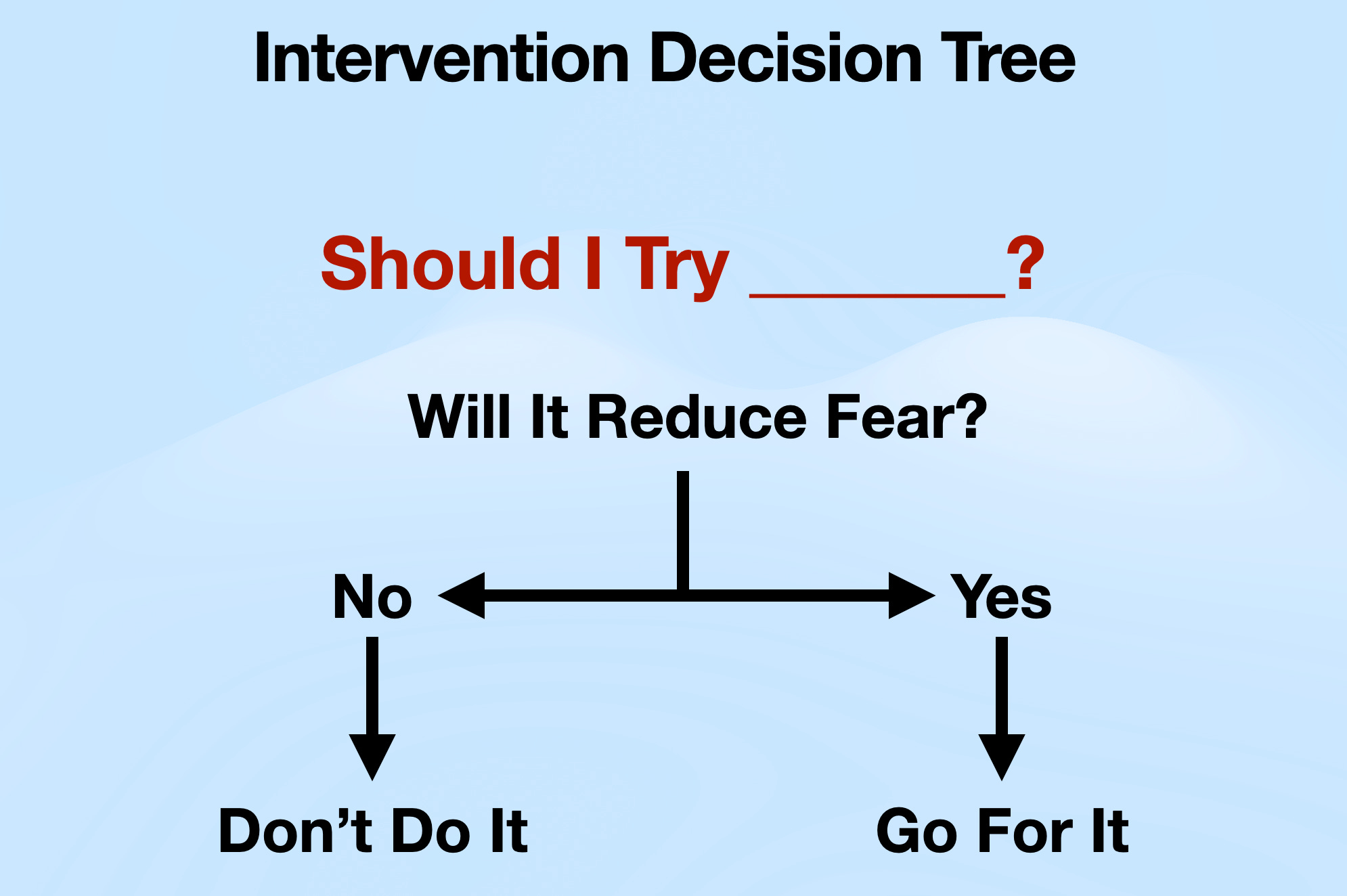
Note that this all depends on a certain amount of day-to-day awareness. When it comes to exercise and movement, your brain and nervous system are the “governor”, not your body. One client shocked herself when she found things like walking and massage flared up her neck pain, but that she could surf just fine and actually felt better afterward. She actually took a chance, during a moment of discomfort, to go surfing, not knowing how she’d tolerate it. Subconsciously, despite massage being objectively healthy for her body, it was reinforcing that something was wrong with her physically. She also felt trapped and wasn’t speaking up for herself to set boundaries around the quality of the bodywork. This created stress for her in the moment. Similarly, walking was connected to early memories of hiking and walking with her abusive father. It created stress as she automatically and subconsciously replayed hard memories each time she walked. Meanwhile, surfing was novel, joyful, and fun. There was no history with surfing, and her intention was not encumbered by the past. Objectively, surfing is not easy on the neck, upper back, and shoulders. However, her nervous system experienced surfing as a safe activity, partly due to her alternative intention and mindset. This is a great example of how you don’t know until you try and how we often surprise ourselves when we try something new. When it comes to pain, we often have to prove to ourselves that the body is safe and that the nervous system is the governor by “doing” rather than by avoiding. Once she disconnects walking from her dad, recognizing that now is not then, and creates a new experience through intention and mindset, she’ll be able to walk just fine. Once she starts to see massage as an act of loving self-care and learns to advocate for herself in the moment (asking for what she needs), bodywork will also be better tolerated.
So stay aware of your mindset and intention around the important things in your life. They tend to run subconsciously and create stress because we’re unaware of how they impact our nervous systems. Regularly assess and inventory WHY you’re doing things, remembering that your “why’ is a moving target. Become aware of how certain activities connect to the past and why your nervous system might struggle to tolerate them. Do this to continue to enjoy and grow with the things you choose to pursue in your life. If your intention and mindset around certain activities change, stay open to abandoning things when they’re no longer serving you. Ultimately, the brain likes it when we have agency and we’re living in clear alignment with our values and true selves. If you want lifelong fitness and longevity, put your money on awareness, intention, and mindset over just about everything else.
Due to my own experience with how exercise and movement have evolved in my life, I’m passionate about supporting others in becoming aware, making connections, letting go of old stories, and adopting a healthier mindset and intention. if you’d like to discover a new relationship and have a new experience during movement and exercise, please reach out to learn how you can make these changes in your own life. I built a course specifically for athletes that starts next month (and has new cohorts starting each quarter). Please join the 12-week program and join a group of athletes in overcoming chronic pain and other symptoms. Learn more and register here:
https://charlesmerrill.podia.com/unlearning-pain-for-athletes
I think you’ll be pleasantly surprised about how this changes everything. You know where to find me when you’re ready.
For my paid subscribers, here’s a list of other evidence-based strategies you can apply to movement and exercise to get the most out of your fitness.
